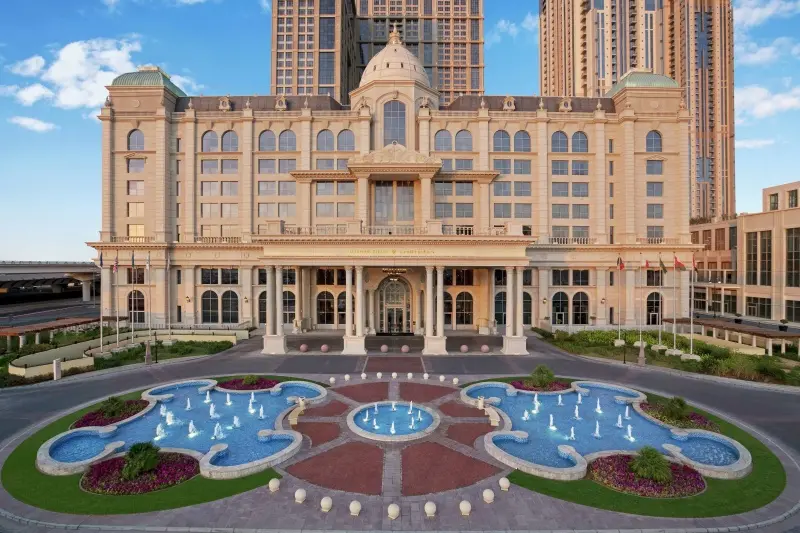
Best Palace Hotels for Retreats: A Definitive Forensic Guide
The transformation of a historic estate—once a monument to aristocratic seclusion or industrialist ambition—into a high-functioning sanctuary for retreats is a feat of modern adaptive reuse. It is a process that requires more than capital or aesthetic refinement; it demands a precise, structural alignment between the physical realities of an aging, often protected, architectural asset and the hyper-personalized requirements of contemporary high-end retreat groups. When a structure originally conceived for the absolute privacy of a few is re-engineered to accommodate the logistical and emotional needs of a gathered community, the resulting operational tension is profound.
To evaluate these properties for retreat purposes, one must look past the immediate aesthetic—the vaulted ceilings, the expansive gardens, or the historical pedigree that defines the marketing of a “palace hotel.” The true value of a palace-style property for retreat organizers lies in its “operational resilience”—the degree to which the property’s physical infrastructure and management systems support a specific, desired experience without compromising historical or structural integrity. When a group experiences a seamless stay in a century-old mansion, they are witnessing the culmination of intense, often invisible, facility management. When that experience falters, it is rarely due to a surface-level design issue; it is almost always the result of a foundational oversight in the stewardship of the site.
This inquiry deconstructs the structural, operational, and fiscal frameworks that define the highest echelon of heritage-focused hospitality intended for retreat occupancy in the United States. It examines the mechanisms by which these estates are preserved, the strategies used to modernize them for the retreat market, and the metrics employed to evaluate their long-term viability as both commercial entities and historical landmarks.
Understanding best palace hotels for retreats
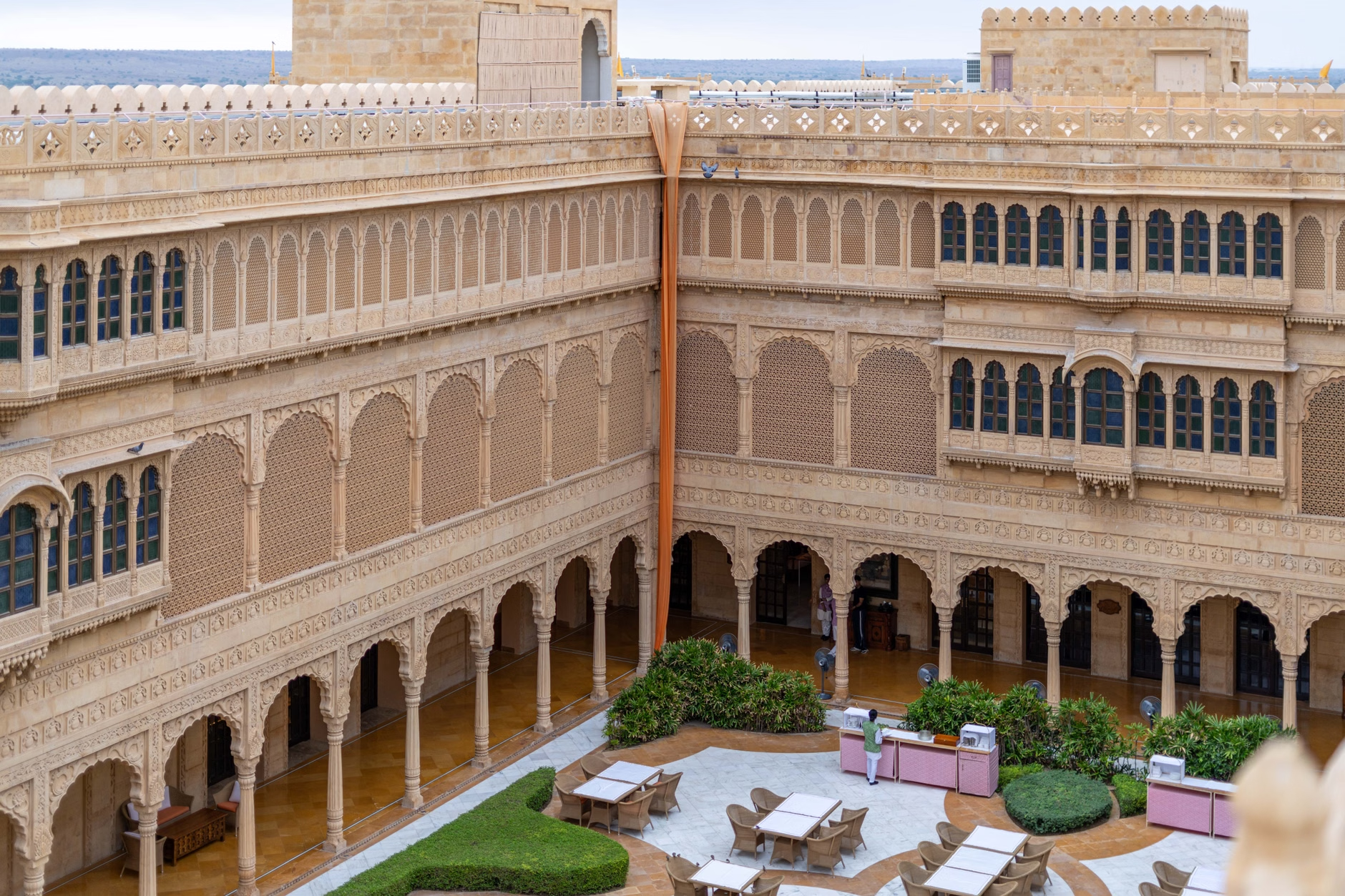
To properly discern the class of luxury heritage assets suitable for contemplative or intensive retreat use, one must develop a refined methodology. Consequently, you can learn how to identify the most viable best palace hotels for retreats offerings by focusing on multiple dimensions of performance. The common consumer expectation, often driven by polished digital marketing, suggests that all properties categorized as “palace-style” are functionally equivalent for high-stakes retreat groups. However, this is a dangerous simplification. In reality, a palace-style hotel is a unique artifact of its time, geography, and original intent. True expertise begins with recognizing that the superior options are those that successfully navigate the friction between historical protection and the specialized needs of a focused, multi-day retreat.
When we explore the landscape of best palace hotels for retreats destinations, we are not merely evaluating yoga studio square footage or the presence of an on-site spa. Instead, we are assessing the property’s structural health, the depth of its cultural narrative, and the sustainability of its operational model. The primary risk in this sector involves the failure to account for “operational boundary-setting.” These hotels require rigid protocols for energy consumption, visitor flow, and structural preservation. Therefore, when stakeholders seek to master the nuances of the market, they must investigate how each estate manages these boundaries. Does a given estate have a specialized team of restoration experts? Or, conversely, is it outsourcing its vital maintenance to general, non-specialized contractors? The difference in long-term reliability is profound.
Identifying Patterns of Stewardship
If a retreat venue appears to offer an infinite range of services without mention of the operational constraints of its site, it likely indicates a lack of maturity. It suggests the estate’s management and preservation strategy is underdeveloped. Furthermore, there is a recurring tendency to ignore the “physiological cost” of large-scale site maintenance. Expansive properties place unique demands on the facility management team, requiring specific environmental controls and constant, subtle cycles of restoration. When we analyze the best palace hotels for retreats markers, we must look for evidence of this invisible labor. By prioritizing structural reliability, seasonal resource viability, and consistency in protocols, the professional operator arrives at an accurate assessment. This determines which properties provide the highest level of long-term value.
The Systemic Evolution of Heritage Hospitality
Historically, the American estate functioned on an “exclusive-use” model. Connectivity was absent, and public access was restricted to the inner circle of the industrialist class. The shift toward the modern boutique palace hotel emerged from the necessity of generating revenue to offset the astronomical costs of maintaining these monuments. This transition created a new friction point: the gap between the retreat group’s desire for privacy and the building’s requirement for structural protection.
We have now entered the epoch of “integrated heritage stewardship.” Modern facility managers are moving toward models that view the destination through a lens of managed coexistence. These sites prioritize architectural preservation, safety, and operational transparency. This shift is powered by advancements in data-driven demand management and resource-monitoring software. When we consider the current state of best palace hotels for retreats properties, the modern expectation is to identify venues that treat their operational status as an extension of the local heritage ecosystem. This approach proves that luxury and land preservation are mutually reinforcing goals.
Conceptual Frameworks and Mental Models
To assess the operational and qualitative success of a heritage hospitality offering for retreats, apply these three frameworks:
-
The Preservation-Integration Index: This measures how thoroughly the retreat services are woven into the historic or natural fabric of the estate. Does the property maintain its own restoration and ecology experts, or does it outsource these critical functions to local contractors?
-
The Resource-Consumption Model: This evaluates the estate’s ability to provide a comprehensive experience while maintaining a low-impact environmental footprint. This is a leading indicator of long-term operational health.
-
The Elasticity-of-Service Ratio: This calculates how the property adjusts its offerings in response to restoration cycles or seasonal visitor/resident shifts. It assesses the agility of their service-recovery protocols.
Key Categories and Operational Variations
| Category | Infrastructure Focus | Stability Signal | Primary Trade-off |
| Integrated-Heritage | Direct, internal preservation | Extremely high reliability | High cost-of-entry |
| Curated-Partnered | High-quality regional coordination | High cultural depth | Logistical complexity |
| Performance-Boutique | Specialized tech/modern focus | Specialized reliability | Limited experiential breadth |
| Wellness-Focused | Nutritional/Activity focus | Consistent physical experience | Rigid scheduling |
Decision Logic for Stakeholders
When stakeholders determine how to navigate the operational taxonomy of best palace hotels for retreats, they should test the property’s infrastructure against their specific requirements. If the objective is the seamless execution of high-stakes, private retreats, the Integrated-Heritage model is the most fiscally and physically responsible. If the goal is a unique, immersive exploration of regional history or geography, the Curated-Partnered model provides significant value. However, one must ensure the property maintains tight operational control over its partners.
Detailed Real-World Scenarios
Scenario: The Infrastructure-Hardening Trial
A property in a historic coastal region experiences persistent supply-chain volatility regarding the specialized materials needed for heritage restoration. A traditional-style hotel, lacking an integrated, predictive procurement system, relies on reactive shipping. This often leads to maintenance gaps. In contrast, a property that has adopted a resource-conservative, internally managed supply chain sees its restoration consistency remain stable. This demonstrates why operational control is the primary determinant of a reliable palace experience.
Scenario: The Guest-Protocol Implementation
A large estate project adopts a mandatory guest briefing that outlines environmental and land-protection protocols. Although this takes additional staff time, the property experiences a significant reduction in “human-instigated” damage, such as furniture wear or unauthorized landscape modifications. This demonstrates how human-behavior management is a pillar of safety for any property worth noting.
Planning, Cost, and Resource Dynamics
The economic viability of these estates is governed by the “monumental operational premium.”
| Operational Focus | Primary Cost Factor | Mitigation Strategy |
| Restoration Infrastructure | Hardware/Certification | Precision engineering/Design |
| Staffing/Education | Training/Management | Integrated, long-term retention |
| Landscape/Gardens | Maintenance/Expertise | Ecological, low-impact planning |
Understanding Indirect Costs
When you investigate the economic reality of best palace hotels for retreats entities, you must account for the “invisible” costs of neglect. Properties that cut corners in infrastructure to appear “luxurious” often face catastrophic insurance liabilities. They also suffer reputational damage following a single serious failure in a historic wing. Therefore, prioritize properties that document their preventive maintenance schedules.
Tools, Strategies, and Support Systems
-
Behavioral Telemetry: Operators use local sensors to map guest movement through the property. This allows for the preemptive adjustment of activity zones to protect delicate terrain or architecture.
-
Hardened Resource-Management Modules: Owners implement standardized, certified systems that eliminate waste. These optimize the use of caloric, energy, or mechanical resources within the palace walls.
-
Heritage Expert Partnerships: Managers form formal partnerships with local conservationists to understand structural aging patterns that might affect property usage.
-
Staff-Centric Preservation: Developers design internal safety protocols that treat every staff member as a land steward, ensuring that operational lapses are corrected immediately.
The Risk Landscape and Failure Modes
-
The “Volume-Scaling” Cycle: Management increases occupancy or density to hit volume targets, degrading the personalized service level and increasing structural wear.
-
Operational Inconsistency: Staffing shifts result in poor adherence to preservation protocols, breaking the “integrity boundary” of the estate.
-
Occupancy Instability: High-turnover seasons lead to “maintenance dilution,” where the training of guests regarding site protocols becomes secondary to throughput.
Governance, Maintenance, and Long-Term Adaptation
-
The Annual Operational Audit: Independent estates subject their entire physical plant and behavioral protocols to annual, forensic inspections. This exceeds the requirements of standard hospitality properties.
-
The Iterative Preservation Review: Maintenance acts as an extension of operations. The team evaluates structural and ecological performance annually and adapts the property layout to changing regional data.
-
Community-Integrated Governance: The most resilient estates participate in local cultural planning, ensuring that their operational standards are consistent with the entire heritage zone. This prevents “hot spots” of degradation. When managing the best palace hotels for retreats effectively, this community-centric approach is non-negotiable.
Measurement, Tracking, and Evaluation
-
Leading Indicators: These include the frequency of activity-adjustment requests and the compliance rate of internal management systems.
-
Lagging Indicators: These track the number of reported “maintenance incidents” or guest-satisfaction variances, as well as the variance in seasonal operational costs.
-
Documentation Example: Maintain an “Operational Reliability Log” that records every interaction, regardless of severity, to identify behavioral trends in guest and staff usage over time.
Common Misconceptions and Oversimplifications
-
Myth: “Palace living is simply about luxury amenities.” Correction: True high-quality retreat travel requires active engagement with the land and strict adherence to preservation protocols.
-
Myth: “Historic activities are always safe.” Correction: Unless managed for specific environmental and structural outcomes, many activities involve risks that require professional oversight.
-
Myth: “Expansive property management is standardized.” Correction: The true value of a palace-style hotel is the customization of its preservation and utility management to its unique geography.
-
Myth: “Environmental risks are unpredictable.” Correction: Most operational failure in these estates follows identifiable patterns based on resource leakage and capacity mismanagement.
Ethical, Practical, and Contextual Considerations
The conversion of historic or expansive land into high-end hospitality destinations raises significant questions about accessibility and the democratization of history. While these sites provide essential revenue for the preservation of endangered architectural heritage, they also risk turning “living history” into an exclusive commodity. A responsible management strategy must balance the commercial imperative with an educational mandate, often providing periods of public access or supporting local cultural initiatives. This is the hallmark of a property that views itself as a steward of national history or ecology, rather than merely a profit-generating entity.
Conclusion
The study of how we determine the viability of the best palace hotels for retreats reveals a sector moving away from outdated, mass-market models toward the sophisticated management of integrated heritage and modern hospitality. These properties serve as high-performance laboratories of the hotel world, pushing boundaries in conservation design, resource management, and rigorous, long-term safety stewardship. They demonstrate that profound immersion is not merely a luxury; it is a measured, engineered risk that requires constant attention to detail and a fundamental respect for the history and geography that share the site. For stakeholders and retreat organizers alike, the future of this sector rests in disciplined, preservation-integrated estates. True success remains quiet, resilient, and enduring, built upon the foundation of intellectual honesty and operational excellence.